Is Prabowonomics Consistent with Sumitronomics?
Translator
Non Koresponden & Reporter JKT
Editor
Dewi Elvia Muthiariny
Selasa, 2 Juni 2026 16:19 WIB
Fahmi Wibawa, Executive Director of LP3ES, Lecturer at the Faculty of Economics and Business, UIN Syarif Hidayatullah Jakarta
On many occasions, President Prabowo Subianto has stated that his economic worldview was profoundly shaped by the ideas of his father, the late Sumitro Djojohadikusumo, widely regarded as one of Indonesia’s most influential economic thinkers. What the President refers to as “Sumitronomics” reflects an economic philosophy rooted in anti-colonial and anti-imperialist socialism.
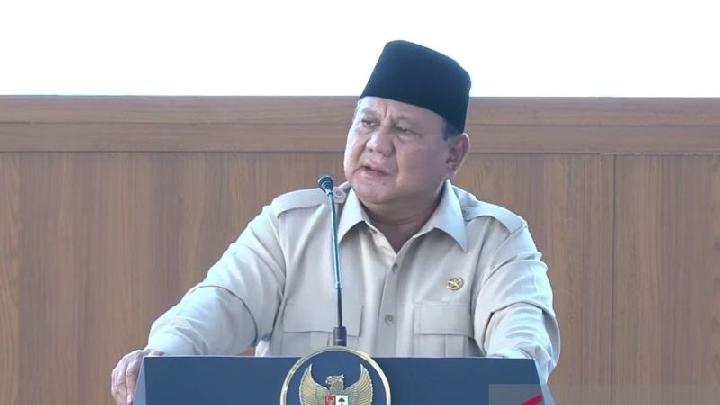
Most recently, during his official address introducing the 2027 Macroeconomic Framework and Fiscal Policy Principles (KEM-PPKF), President Prabowo once again emphasized that his administration’s fiscal policies are grounded in Sumitro’s intellectual legacy. “We are continuing the foundations he laid: growth, equity, and stability,” Prabowo declared before the House of Representatives.
The question, however, is this: what exactly is Sumitronomics, and are Prabowo’s economic policies described by many of his admirers as “Prabowonomics” truly aligned with the principles of Sumitronomics?
Indonesia’s economic history records Sumitro as a deeply respected figure who earned the title of the “Grand Master of Indonesian Economics.” His intellectual contributions, policy initiatives during his tenure as minister, and academic lectures as a Professor of Economics collectively gave rise to what later became known as Sumitronomics.
At its core, Sumitronomics rests upon three principal pillars of economic development.
The first is high economic growth. In his book Foundations of Development Economics, published by LP3ES, Sumitro argued that growth is the primary engine of development. Without a strong economy, a nation would not be able to sustain either political sovereignty or social stability.
The second pillar is the equitable distribution of development benefits. In another work published by LP3ES, Indonesia in Global Development, Sumitro rejected a development model that benefits only a narrow elite. He emphasized that high growth must be accompanied by fair distribution so that prosperity can genuinely be experienced by the broader population.
The third pillar is national stability. In his English-language book Science Resources and Development, also published by LP3ES in 1971, Suemitro explained that political and social stability, along with ecological balance, are essential prerequisites for rapid, targeted, and high-quality economic development. Without stability, neither growth nor equitable distribution can be sustained over time.
Prabowonomics places strong emphasis on the state as the prime mover of the economy. Its major policy initiatives include: the Free Nutritious Meals Program (MBG): a populist welfare initiative based on consumption subsidies; Danantara: a state-driven strategy focused on downstream natural resource industries and green energy development; the Red-and-White Village Cooperative Program: aimed at strengthening rural economies through cooperatives supervised by multiple ministries; and
People’s Schools, a state-funded education initiative intended to equalize access to education.
Yet according to Sumitro, educational reform, industrial diversification, and productivity-enhancing regulations were the ultimate goals of economic policy. In his view, the state should function primarily as a facilitator rather than as a full-scale controller or prime mover of the economy.
From this perspective, both the free nutritious meal program and people’s schools would likely be considered inconsistent with Sumitronomics, as they focus more heavily on consumption subsidies and equal access than on productivity enhancement.
With regard to Red-and-White Village Cooperatives, although the program contains elements of equitable development, one might imagine that if Sumitro were still alive, he would stub out his cigarette, rise from his chair, and say firmly to Prabowo, “Wo, development through cooperatives must cultivate an industrial culture so that Indonesia becomes a nation of creators, not merely a society driven by populist cooperatives such as these.”
Finally, there is Danantara. At its establishment, this state strategic asset management agency was presented as a new instrument to optimize national assets through investments in priority sectors, while also embodying the Sumitronomics principles of growth, equity, and stability.
However, a close reading of Sumitro’s book, People’s Credit During the Depression, reveals a different emphasis. Sumitro argued extensively that the government must intervene to provide accessible credit for ordinary people and small-scale economic actors—not to create a massive investment institution managing trillions in public funds with limited transparency.
In the book, Sumitro wrote, “I arrived at the conclusion that regularly provided credit under reasonable conditions is indeed an essential requirement for security of livelihood and business advancement.”
Therefore, if President Prabowo wishes to be remembered not only as the biological son of Sumitro Djojohadikusumo, but also as the true intellectual heir of Sumitronomics, he should at the very least revisit the major works of his father such as People’s Credit, Foundations of Economic Growth and Development, Trade and Industry in Development, and Indonesia in Global Development.
For nearly two decades, particularly throughout the 1980s and 1990s, these books served as essential reading for scholars, lecturers, students, and researchers. More importantly, many of their substantive ideas remain highly relevant today, as economic challenges and policy dilemmas tend to recur across generations, allowing past policy experiences to inform present-day interventions.
In today’s context, Sumitro’s emphasis on industrialization remains profoundly relevant within the global economic landscape. Prema-Chandra Athukorala and Hal Christopher Hill argue in their 2026 book Revisiting Globalization that one of the most significant innovations in international industrial organization over the past half century has been the vertical disintegration of production processes across multiple countries a phenomenon widely known as the Global Manufacturing Value Chain (GMVC).
Trade driven by global production-sharing within GMVCs has become one of the primary forces behind the dramatic shift of manufacturing exports from developed countries to developing economies worldwide.
*) DISCLAIMER
Articles published in the “Your Views & Stories” section of en.tempo.co website are personal opinions written by third parties, and cannot be related or attributed to en.tempo.co’s official stance.