Did Indonesia's Shrimp Radioactive Contamination Come from a Neighboring Factory?
Translator
Zacharias Wuragil
Editor
Dewi Elvia Muthiariny
Jumat, 12 September 2025 08:34 WIB
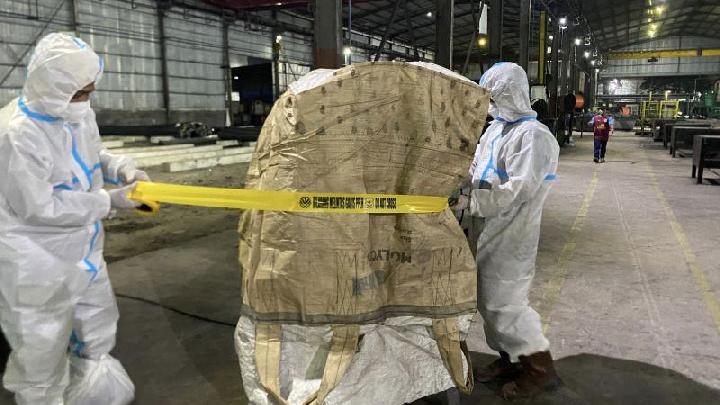
TEMPO.CO, Jakarta - An investigation into the radioactive contamination of processed frozen shrimp, which was exported by PT Bahari Makmur Sejati (BMS Foods), has led authorities to a nearby scrap metal processing plant. Both facilities are located within the same industrial area in Cikande, Serang, Banten.
According to Rizal Irawan, Deputy for Law Enforcement of the Ministry of Environment, an initial investigation, conducted with the Ministry of Maritime Affairs and Fisheries, the Nuclear Energy Regulatory Agency, and the Police, confirmed the safety of the raw shrimp materials exported to the United States.
At the BMS Foods facility, the joint team found the radioactive element Cesium-137 in the blower and ventilator. Though the concentration was low and well below the safety threshold, the entire factory was immediately decontaminated.
Further tracing led the team to two locations with higher radiation levels. The first was a scrap metal pile in a hut outside the BMS Foods facility. The second was the PT Peter Metal Technology (PMT) plant, also in the same industrial area, as the investigation's tracking radius expanded to two kilometers.
PMT is now a suspect for the source of the contamination. The radiation levels at this location ranged from 0.3 to 0.5 microsieverts per hour, significantly higher than the normal level of 0.1 microsieverts per hour.
"Why are they a suspect? Because the examination results on their production equipment contained Cesium," Rizal stated, as quoted by Antara. He added that the company also has a connection to PT NAC, which is currently under investigation by the joint team.
According to information obtained by Tempo, the seal at the BMS Foods factory has been lifted. However, the company is still on the U.S. Food and Drug Administration's (FDA) import alert list, preventing it from resuming exports.
Timeline of the Contamination Incident
The Cesium-137 contamination was first discovered in early August by the U.S. Customs and Border Protection. It was detected in the packaging boxes of frozen shrimp products in four American ports: Los Angeles, Houston, Savannah, and Miami.
The FDA then conducted its own analysis, which confirmed the presence of Cs-137 in the samples of breadcrumb-coated frozen shrimp. According to the FDA, exposure to this radioactive material, even below the safe threshold, can increase the long-term risk of cancer through DNA damage.
Following these findings, BMS was found to have violated Federal Law regulating drugs, food, and cosmetics. Before the discovery, BMS was selling its products through the Walmart network in the United States.
Consequently, the FDA added BMS to its import alert list for chemical contamination, temporarily banning the Indonesian exporter from selling its shrimp in the U.S. Additionally, BMS Foods products already in the market were recalled, even if they had not been proven to be contaminated.
Editor's Choice: Shrimp Radiation Scare Hits Market; Indonesian Govt Urged to Be Transparent
Click here to get the latest news updates from Tempo on Google News