TEMPO.CO, Jakarta -
The Central Java Regional Police have uncovered an international online scam syndicate targeting foreign nationals in the Greater Solo of Central Java.
The Director of Cyber Crime Investigation of the Central Java Regional Police, Commissioner Himawan Sutanto Saragih, stated that the case was revealed through cyber patrols. The investigation subsequently led authorities to several locations across Sukoharjo Regency and Surakarta City.
"From the findings, the officers discovered a total of seven crime scenes," Himawan said during a press conference on Monday, June 1, 2026, at the Central Java Regional Police Headquarters in Semarang, as cited from a written statement.
One of the crime scenes was an office building, while the other six were boarding houses located in Surakarta and Sukoharjo.
Global Operations Hidden in Local Boarding Houses
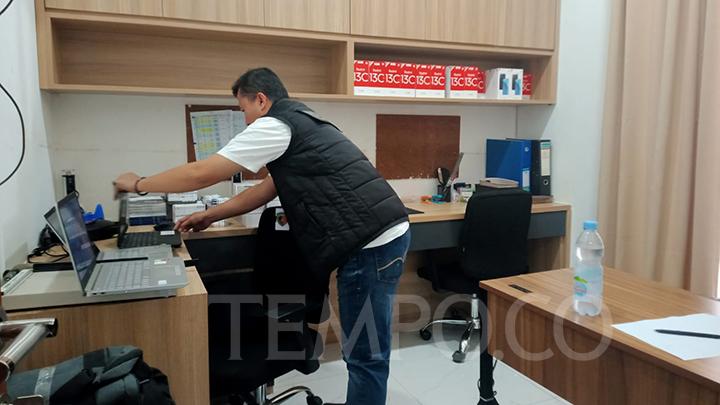
The office was owned by PT Digi Global Consultants, located in the Solo Baru area of Sukoharjo. The police suspect that the office was used both for recruiting employees and as the main operational center. However, some perpetrators conducted their activities from boarding houses to obscure their operations.
The police have named 39 individuals as suspects. Twenty-eight of them are Indonesian nationals, while seven are Nepalese and four are Myanmar nationals.
In this operation, the Indonesian police collaborated with the U.S. Federal Bureau of Investigation (FBI), as the victims were from the United States. The police also engaged the Financial Transaction Reports and Analysis Center (PPATK) to trace banking fund flows as well as cryptocurrencies, and coordinated with the Directorate General of Immigration regarding the handling of the apprehended foreign nationals.
This scam syndicate had been operating from July 2025 to May 2026. The perpetrators frequently relocated and utilized four different offices before being raided in Greater Solo.
During their operation, they amassed profits amounting to US$2,327,625.85, or around Rp41.1 billion, from 133 victims. Specifically, the perpetrators targeted American citizens.
Romance Bait and the 'Pig Butchering' Scheme
Himawan stated that the modus operandi of this fraud was "pig butchering," which literally means slaughtering pigs. "The perpetrators carried out this fraud under the guise of building romantic relationships with the victims, then persuading the victims to invest in fake investments or cryptocurrencies," he said.
To execute their scheme, the perpetrators used various online dating applications such as Tinder, Puff, and Boo, alongside social media platforms like Facebook. After the victims responded, communication was directed to private messaging applications and cultivated into a close, trusting relationship.
To reinforce their deception, the perpetrators used fake identities when creating social media accounts. They also prepared photos and videos of women to convince the victims.
Furthermore, the syndicate hired a woman identified as F to serve as a model to provide persuasive photos and conduct live video calls to further deceive the victims, leading them to fully trust the setup and willingly invest funds into the platform controlled by the perpetrators.
Structured Hierarchy and Manipulated Crypto Platforms
Based on the investigators' findings, this syndicate operated in a structured manner with a clear division of roles, ranging from leaders and models to marketing personnel and marketing assistants. Out of the 39 suspects, 33 individuals acted as marketing personnel, with 11 being foreign nationals and 22 being Indonesian nationals. Their task was to lure victims on dating applications using fake identities.
The deceived victims were directed to invest on the trading page crypto coverts.net at the address www.livetradingcrypto.com. The page had manipulated its system so that all the victims' funds went directly to the perpetrators' network.
"Aside from the marketing personnel and marketing assistants, there is a vital role of the leader in providing communication equipment, giving tactical directions once the target is set, assisting in marketing operations, and taking full control of the trading platform to lock the funds that the victims had deposited and prevent them from being withdrawn," he added.
The police also arrested an individual identified as ASC, who acted as the provider of facilities, equipment, and infrastructure for the crime.
Confiscated Evidence and Legal Charges
The authorities also confiscated several pieces of evidence, including one signboard of PT Digi Global Consultants, one bundle of Notary Deed rental agreements, one market guide notebook, two screenshots of the crypto website interface, 140 mobile phones, 123 computer/PC units, two laptops, 78 monitors, 54 keyboards, four TVs, and one motorcycle, along with its vehicle registration certificate.
In handling this case, investigators applied multiple charges against the marketing personnel, marketing assistants, models, and leaders under Article 51 paragraph (1) jo. Article 35 or Article 45A paragraph (1) jo. Article 28 paragraph (1) of the Electronic Information and Transactions Law (ITE Law), or Article 492 of the Criminal Code, with a maximum sentence of 12 years imprisonment.
Meanwhile, for the suspect ASC as the provider of facilities and equipment, the charges were covered by Article 607 paragraph (1) letter a, b, or c of Law Number 1 of 2026 on the Adjustment of Criminal Law for the Criminal Code, with a maximum sentence of 15 years imprisonment.
Read: Police Detect Shift of Cambodia Crime Syndicates to Indonesia
Click here to get the latest news updates from Tempo on Google News