MTI Urges Systemic Overhaul After Bekasi Train Collision
Reporter
April 28, 2026 | 03:58 pm
TEMPO.CO, Jakarta - The Indonesian Transportation Community (MTI) is calling for a comprehensive overhaul of the national railway system following a train collision at Bekasi Timur Station on Monday night, April 27, 2026.
The Chairperson of the MTI Railway Forum, Deddy Herlambang, stated that this incident bears a resemblance to the 2010 Petarukan train collision. At that time, the KA Argo Bromo Anggrek also struck another train from behind.
"In this latest case, preliminary allegations point toward operator negligence in responding to a stop signal," Deddy noted in a written statement on Tuesday, April 28, 2026.
He explained that the Jatinegara-Cikarang line uses an open-block signaling mechanism. Under this system, if a train stops ahead, the signal automatically turns red, indicating that any following train must also come to a halt.
"A violation of this signal has the potential to cause a collision," he said.
In addition to human factors, Deddy highlighted the suboptimal implementation of technology-based safety systems. This is despite the Transportation Ministerial Regulation No. 52 of 2014, which mandated the installation of Automatic Train Safety Systems (SKKO) within a specified timeframe.
Systemic Vulnerabilities Exposed
He believes this accident exposes systemic vulnerabilities in national railway operations, particularly on congested lines featuring mixed traffic between the KRL Commuter Line and long-distance trains, travel control systems, and rear-end collision risk mitigation.
Therefore, Deddy is pushing for several critical improvement measures. One of them is the accelerated construction of the double-double track on the Bekasi-Cikarang line to separate commuter and intercity services. Furthermore, he emphasized the need for an audit of the Centralized Train Journey Control System (PPKT).
Technological and Operational Reforms
On the technological side, Deddy recommends the implementation of advanced safety systems, such as Automatic Train Protection (ATP) for long-distance fleets, and modern signaling systems like ETCS or CBTC for urban rail.
Deddy also believes there is an urgent need for operator fatigue management, the use of simulators for emergency scenarios, and the prioritization of safety principles over punctuality.
He further emphasizes the importance of a comprehensive rollout of the Railway Safety Management System (RSMS) as an integrated framework for risk identification, hazard control, and continuous safety enhancement.
"This accident shows that our safety system remains reactive, rather than being based on predictive and preventive risk management," he said.
Deddy also highlighted the importance of integration between the regulator and the operator, namely the Directorate General of Railways at the Ministry of Transportation and PT Kereta Api Indonesia, in ensuring the safety of infrastructure and facilities.
Infrastructure and Reliability Concerns
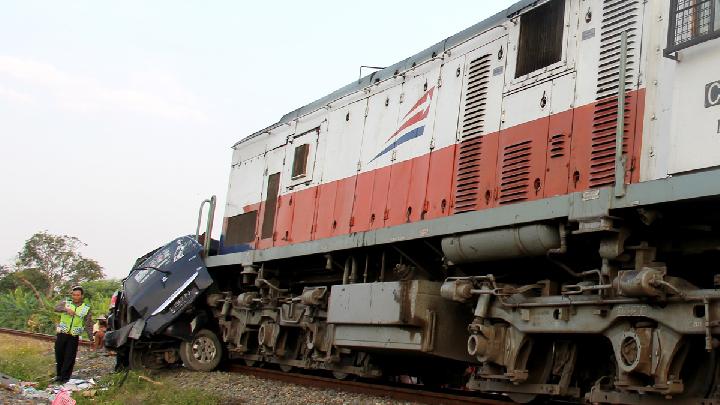
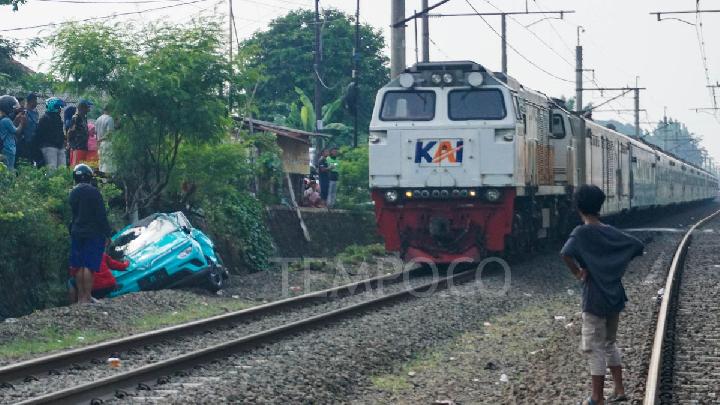
He went on to note that level crossings, often the initial triggers for accidents, require serious attention. "The development of standard operating procedures (SOP) for road users when vehicles stall on the tracks, as well as an evaluation of vehicle reliability, including the electric taxis involved in this incident, are necessary," he said.
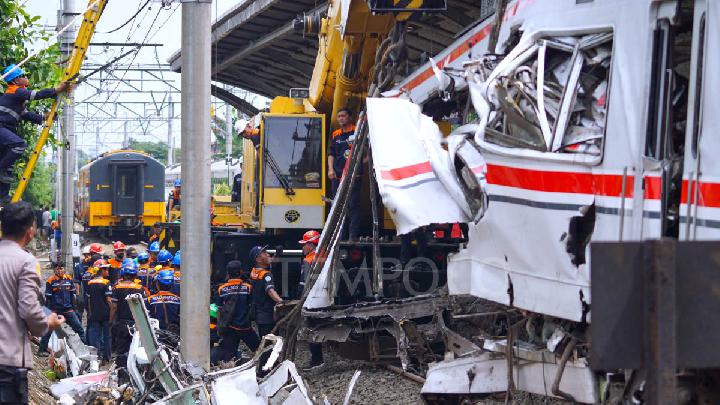
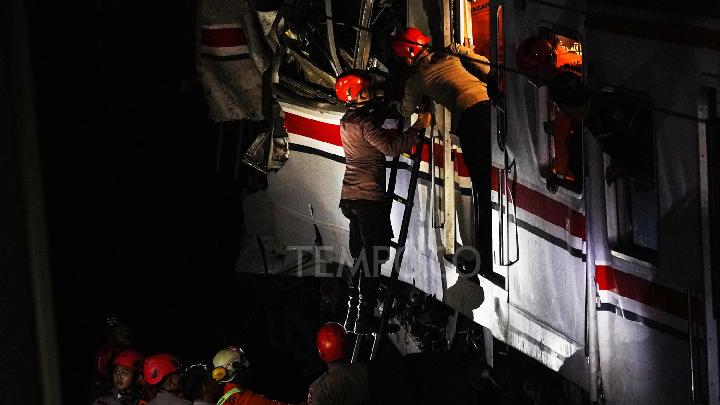
As widely reported, the train collision occurred at approximately 8:55 p.m. Jakarta time when the Argo Bromo Anggrek, traveling the Gambir-Surabaya Pasar Turi route, struck the rear of a Commuter Line that was stationary at the Bekasi Timur Station platform. The incident resulted in a complete halt of train traffic on the Jakarta-Cikarang line.
As of Tuesday morning, state-owned railway operator PT KAI reported that 14 passengers have been confirmed dead. Additionally, 84 people were reported injured and are currently receiving treatment at several hospitals.
Read: Prabowo Expresses Condolences for Bekasi Train Crash Victims
Click here to get the latest news updates from Tempo on Google News