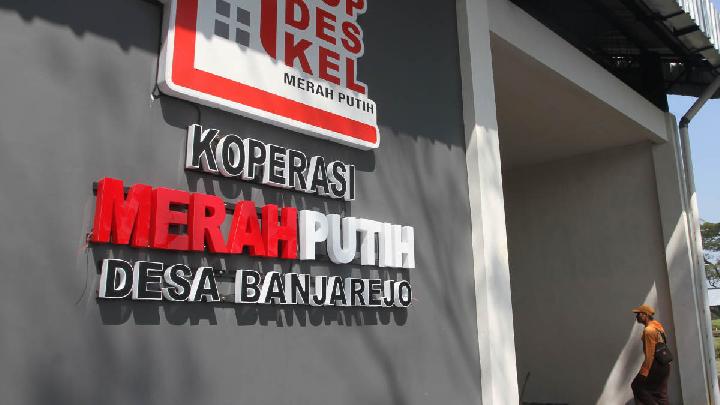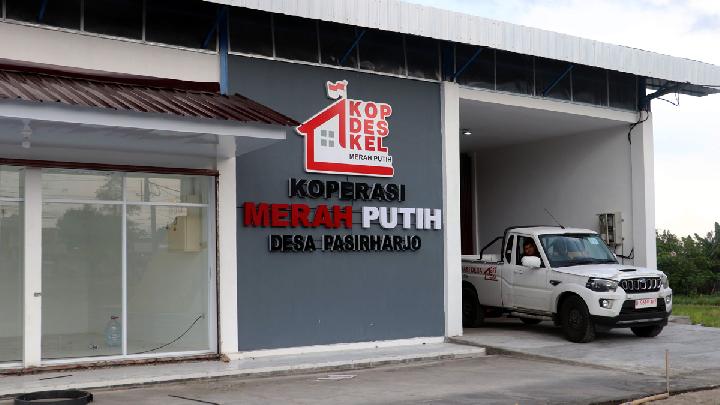
The management of these state-owned cooperatives is moving ever further away from the spirit of mutual cooperation. It is rife with conflicts of interest.
THE recruitment of 30,000 managers for the Red-and-White Village/Subdistrict Cooperatives underlines one thing: President Prabowo Subianto’s administration is all about haste. Programs are spurred on as if they were a relay race, while the regulations are left at the starting line. As a result, opportunities for abuses of power and corruption are only a matter of time.
Looking at the recruitment process, which started in April 2026, there have been irregularities at almost every stage. Initially, the government wanted to make these cooperative managers government employees (ASN). This plan was included in the considerations of the Presidential Decree on National Selection Committee for Human Resources Procurement to Support the President’s Priority Programs, which is the legal basis for the recruitment.
At the same time, Agrinas Pangan Nusantara—a state owned company tasked with speeding up the construction of retail outlets, warehouses and cooperative facilities—also pushed for managers to be given ASN status. This proposal seemed strange from the outset. Government employees come under the authority of the officials in the staff development agencies, such as the National Civil Service Agency (BKN), the Ministry of State Apparatus Empowerment and Bureaucratic Reform or regional leaders and the heads of institutions. But the government has subsequently said that these managers will only be employed for two years as contract employees under Agrinas.
This decision creates a new problem. The government plans to use state budget funding to pay the employees of a state-owned enterprise. But it is difficult to find a legal basis that allows the State Budget to be paid directly to state company employees as salaries. In a republic known for its complex multi-layered regulations, such an important rule has yet to be produced.
The next area of confusion is even more striking. Even though the funding procedures are still unclear, the selection of the 30,000 village cooperative and fishing village cooperative managers has already reached the competency testing stage. Recruitment has gone ahead faster than the confirmation of funding procedures. It is as if the ship has been ordered to sail first, with the matter of passengers to be considered later.
This disarray has its roots in the mistakes made in the policy design since the start. The central government forced through the establishment of the cooperatives, then commanded the construction of retail outlets and warehouses. Presidential Instruction No. 9/2025 and Presidential Instruction No. 17/2025 were used to speed things up. In bureaucratic language, this is referred to as “acceleration,” but on the ground, it feels more like mobilization.
However, this command approach is completely at odds with the principles of cooperatives laid down in the Cooperatives Law. Cooperatives should emerge from the awareness of their voluntary members, be managed democratically through meetings of these members and be based on the familial principles. Now, control has been passed on to Agrinas. Village governments and cooperative members are like homeowners who only receive photocopies of their land deeds.
It is difficult to hope that these cooperatives will be able to stimulate the people’s economy if their management is in disarray from the start. The problem is becoming more serious because recruitment has been opened up to all disciplines without any requirement to have an understanding of cooperatives. As a result, the selection process is in danger of becoming a back door for the appointment of people nominated by particular political groups or networks. There will be no need for them to bother looking for candidates with special competencies.
If this is allowed to continue, village cooperatives will easily be dragged into conflicts of interest. Instead of being a way of empowering people, they have the potential to turn into an extension of the government.