IDI Chief: Foreign Doctors Cannot Enter Indiscriminately
Translator
Editor
July 27, 2024 | 12:24 pm

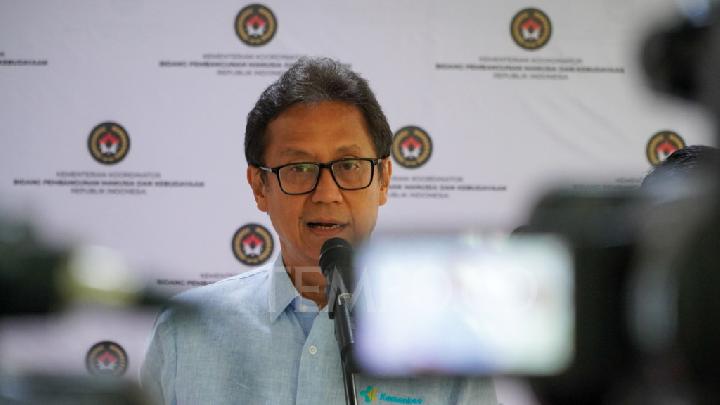
TEMPO.CO, Jakarta - Chair of IDI, Mohammad Adib Khumaidi, discusses the polemic over the plan to allow foreign doctors to practice in Indonesia. He emphasizes stringent regulations are necessary.
THE controversy surrounding the policy on foreign doctors caused the Dean of Medicine at Airlangga University, Budi Santoso to lose his position in the first week of July. The obstetrician was allegedly fired for his criticism of the government’s plan to open the door to overseas doctors. The dismissal was eventually annulled after the university’s Rector Mohammad Nasih reinstated Budi on Wednesday, July 10.
To Mohammad Adib Khumaidi, Chair of the Indonesian Medical Association (IDI), criticisms such as that of his colleague from Airlangga University are quite normal in the medical world. He said doctors spoke out for the sake of patient safety. “The state shouldn’t have problems with academic freedom,” he said on July 11.
The plan to allow foreign doctors into Indonesia was proposed by Health Minister Budi Gunadi Sadikin. The former Chief Executive Officer (CEO) of Bank Mandiri argued that the presence of foreign doctors could improve the quality of healthcare services, enhance the competence of local doctors, and help patients with heart diseases.
Adib said that simply bringing in overseas doctors would not solve the problems. “We have to overcome problems such as inability (of patients), funding and infrastructure,” the orthopedist argued.
In an over one-hour-long interview with Tempo reporters, Sunudyantoro and Yosea Arga Pramudita at the IDI headquarters in Menteng, Central Jakarta, Adib also explained his agency’s relationship with the health minister in recent times. “There are parties who took the opportunity to position IDI as being constantly at odds with the government,” he asserted. Excerpts of the interview:
The Health Ministry is opening up opportunities for overseas doctors to come and work in Indonesia. Is it an appropriate step?
What needs to be highlighted is the restriction of practices stipulated in the regulations of each country. Bilateral agreements are necessary for people to work in certain countries. Foreign doctors cannot just enter indiscriminately before the government has these agreements.
Why are agreements important?
Via agreements, requirements should be set and fulfilled. Let me give you an example. Singapore requires foreign workers to possess special qualifications. Only graduates from certain universities such as Malaysia, Australia, the United Kingdom, etc. can work there. They have the list. They also stipulate that foreign doctors must first work in general hospitals, not immediately in private hospitals.
What is the reason for such a process?
Foreign doctors are first supervised in general hospitals. Only afterward are they allowed to practice medicine in private hospitals. That’s the domestic regulation of the Singapore government to protect its citizens.
Do we not have yet such strict regulations albeit the plan to open up opportunities for foreign doctors?
There was a Health Minister Regulation concerning the evaluation of a doctor’s clinical practice skills. We need to strengthen these regulations.
What is the importance of regulations when foreign doctors enter the country?
It is the requirements that will protect the safety of our patients or citizens as the regulation will ensure that these doctors don’t have disciplinary records or legal or ethical problems.
Weren’t there already precedents of foreign doctors practicing medicine in Jakarta?
The Jakarta Health Office once deployed a team to monitor a foreign doctor. We received a report on that doctor and then wrote to the authorities in his country of origin. He was summoned back home and sanctioned. A violation like this is only known to peer groups. The point is that professional organizations and specialist associations must be involved.
Which countries could be used as benchmarks for regulations on the employment of foreign doctors?
Every country has its own domestic regulations. The majority of the countries have almost the same rules. The primary requirement is a letter of good standing. Second, competency evaluation. We should not let people come claiming to be specialists only to find out later that they are not. The UK has the General Medical Council, a public agency that regulates medical practices. They just verified with us the status of an Indonesian doctor who wanted to work there. Doctors treat patients and help make life-and-death decisions for patients so there needs to be strict regulations and background checks.