Bringing Extinct Animals Back to Life, Can it be Done?
October 19, 2018 | 10:30 pm

TEMPO.CO, Jakarta - The passenger pigeon, Dodo bird and mammoth are examples of extinct animals that were drained from existence due to environmental hazards and human activities. Now, advancements in technology makes it possible for scientists to resurrect these extinct creatures.
The film Jurassic Park - based on a novel by Michael Crichton – popularized this idea by revealing how the process of resurrecting extinct animal is more than just a scientific concept.
In 2003, scientists managed to bring back the Pyrenean ibex by creating a clone taken from a frozen sample before the goat species became extinct. The clone, however, only managed to breath a few minutes of life before it died from lung failure. Yet this experiment brought new hope of saving species in danger of extinction. What was then a fantasy can now become a reality.
"We can use some of these techniques to actually help endangered species improve their long-term viability," said ecologist Stanley Temple of the University of Wisconsin-Madison. "Where it gets controversial is when we start talking about species that have been extinct for a very long period of time."
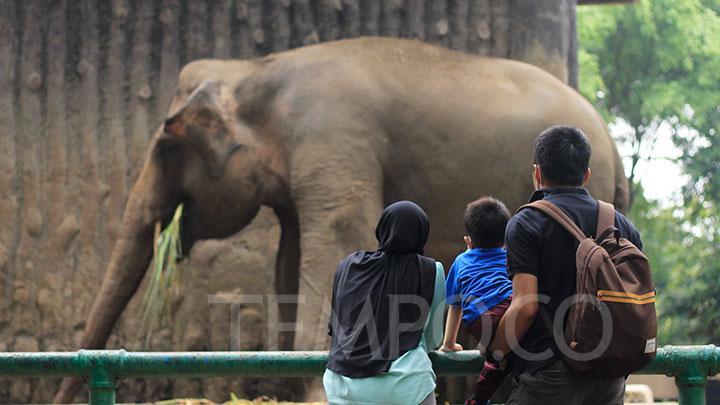
Other scientists dream of bringing back a beast that roamed the Earth hundreds of thousands of years ago: the woolly mammoth. Well-preserved mammoths have been dug out of the Siberian tundra containing bone marrow, skin, hair and fat. If a living mammoth cell were found, it could be grown in a lab and coaxed to form an embryo. The embryo could be implanted into the closest living relative of mammoths, an elephant, which would give birth to a baby mammoth.
Finding a living mammoth cell is very unlikely. But South Korean biomedical engineer Insung Hwang hopes to find just a cell nucleus and produce a clone from it, like Dolly the Sheep. The nucleus would be implanted into an elephant egg whose nucleus had been removed. But this is not easy — no one has yet successfully harvested an elephant egg.
Yet the challenges that follow, if this experiment ever succeeds, is no treat. Even if researchers succeed in creating a mammoth, passenger pigeon or any other extinct creature, it has to survive in the wild. This means having the right food and habitat, and evading predators, especially humans.
Criticism over the efforts to bring back extinct animals to life have been raised all over believing it will do more harm than god.
"I don't think it has any merit at all," said conservation ecologist Stuart Pimm of Duke University, N.C. "It totally ignores the very practical realities of what conservation is about."
Biologist David Ehrenfeld of Rutgers, The State University of New Jersey, agrees that de-extinction would hamper conservation. "It's very negative, very expensive and not going to achieve any conservation goal as far as I can see," he said.
Despite all the controversies, Temple is still optimistic that his technique of bringing extinct animals back to life will have a positive outlook.
"If we're going to try to do this seriously, it's probably in everyone's best interest that the early attempts have a high probability of success," he said.
ROSALINA | NBC NEWS