Extreme El Nino Threat: Indonesia Slashes Irrigation Water Use by 20%
Reporter
March 29, 2026 | 08:46 pm
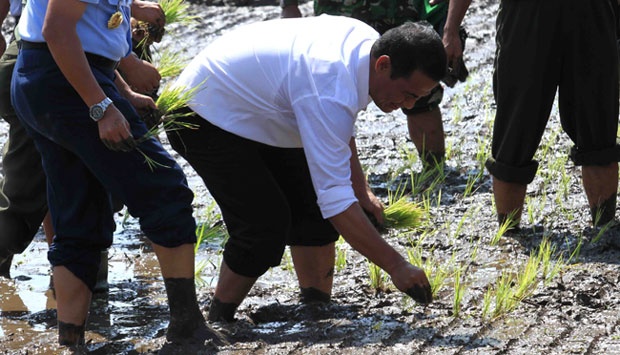
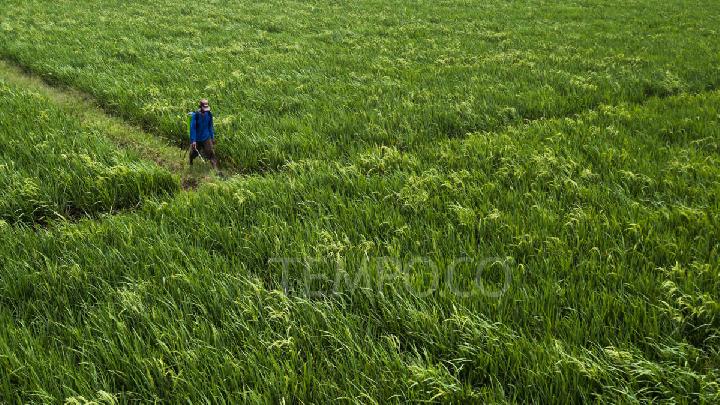
TEMPO.CO, Jakarta - Indonesia's Ministry of Agriculture is rolling out the Alternate Wetting and Drying (AWD) method to cut irrigation water use by up to 20 percent, aiming to mitigate the risks posed by the extreme El Nino phenomenon, dubbed “Godzilla El Nino,” which could trigger prolonged drought.
“The AWD method can reduce irrigation water usage by up to 20 percent without affecting rice productivity. Water efficiency is key in facing increasingly unpredictable dry seasons,” said Agriculture Minister Andi Amran Sulaiman in a statement in Jakarta on Sunday, March 29, 2026, as quoted by Antara.
He added that the technology is part of Indonesia’s broader climate change adaptation and mitigation strategy, focusing on the efficient use of increasingly scarce water resources. Through AWD, farmers can manage irrigation more precisely, ensuring crops grow optimally even under water constraints.
“Water management is a crucial factor in sustaining agricultural production. Proper and efficient water planning significantly reduces drought risk while maintaining productivity,” Amran emphasized.
Meanwhile, Fadjry Djufry, Head of the Agricultural Assembly and Modernization Agency (BRMP) at the Ministry of Agriculture, highlighted that AWD addresses real challenges in the field, particularly during dry seasons.
“This technology allows farmers to maintain optimal plant conditions while reducing reliance on continuous flooding, preparing them better for potential droughts,” said Fadjry.
AWD was developed by the International Rice Research Institute in 2009 and adapted in Indonesia by the Ministry of Agriculture since 2013. Based on tests over six planting seasons, the method can reduce irrigation water use by 17-20 percent while maintaining rice yields.
“Studies show that AWD significantly reduces water usage without lowering productivity. Under certain conditions, this efficiency could even allow irrigation expansion to other fields,” Fadjry said.
He also noted environmental benefits: “The method improves soil conditions and lowers greenhouse gas emissions from rice fields.”
Ali Pramono, an analyst at the Agricultural Environment BRMP, explained that AWD works by regulating irrigation based on soil moisture, avoiding continuous flooding. “After the initial flooding phase, water is allowed to recede before limited re-watering is applied,” he said.
The technique uses a simple PVC pipe system, 10–15 cm in diameter and 30–100 cm long, perforated and wrapped in gauze, to monitor water depth.
The pipe, placed near field embankments, represents average field conditions. Re-watering is typically done when water drops 10–15 cm below the soil surface, bringing it back to 3–5 cm to maintain moisture.
This cycle is repeated, with adjustments for field and weather conditions, while ensuring water availability during critical stages such as fertilization, weeding, and flowering.
“AWD not only boosts water efficiency but also improves root and soil health, making crops more drought-resilient and potentially increasing yields. It is part of a broader mitigation strategy to strengthen the resilience of rice production,” Ali said.
He added that AWD is a core component of climate-smart agriculture, emphasizing efficiency and sustainability while safeguarding rice productivity during water-scarce dry seasons.
Read: Indonesia Eyes Stronger Food Reserves as 'Godzilla' El Nino Looms
Click here to get the latest news updates from Tempo on Google News