Getting to Know the Perseid Meteor Shower Phenomenon in August 2025
Reporter
August 5, 2025 | 11:02 am

TEMPO.CO, Jakarta - Avivah Yamani, an astronomy communicator from the South Sky community in Bandung, said that several celestial events are set to occur in August 2025. "There will be the Perseid meteor shower and the Jupiter-Venus conjunction," she said on Sunday, August 3, 2025.
The Jupiter and Venus conjunction is expected to be visible from Earth on August 12th. This celestial phenomenon can be observed in the eastern sky, and observers will have to wait for Venus to rise in the early morning, predicted to occur at 03:13 AM WIB (Western Indonesian Time).
What is the Perseid Meteor Shower?
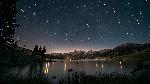
The peak of the Perseid meteor shower is expected on the night of August 12th to the early morning of August 13th, 2025. This phenomenon starts from mid-July and will end in August. It originates from the debris and ice left by the Swift-Tuttle Comet as the Earth crosses its path.
When small fragments the size of a grain of sand enter the atmosphere at a speed of 214,000 kilometers per hour, they will burn and appear as bright flashes of light in the sky. Most meteors are visible at an altitude of about 97 kilometers and reach temperatures of over 1,650 degrees Celsius.
According to the NASA website, this year's Perseid meteor shower will appear faster and brighter. Perseid will leave long-lasting trails of light and colors as it crosses the Earth's atmosphere.
Perseid is a meteor shower with about 50 to 100 meteors visible per hour. This meteor shower occurs during warm summer nights. However, this year, the meteor shower coincides with the full moon phase, which may reduce visibility of the faint meteors.
Perseid appears as a fireball originating from a brighter flash of light and color that can last longer than a typical meteor streak. This advantage is due to the fireball originating from larger comet material particles.
Meteors originate from the remnants of comet particles and asteroid fragments. When a comet orbits the Sun, it leaves a trail of dust behind. Every year, the Earth passes through this debris trail, allowing these fragments to collide with the atmosphere. The fragments that collide with the atmosphere will disintegrate, forming glowing and colorful streaks in the sky.
The space debris pieces that interact with the Earth's atmosphere to form the Perseid originate from the 109P/Swift-Tuttle comet. Swift-Tuttle comet orbits the Sun once every 133 years. The Swift-Tuttle comet was discovered in 1862 by Lewis Swift and Horace Tuttle. In 1865, Giovanni Schiaparelli first observed scientifically that this comet is the cause of the Perseid.
Swift-Tuttle is a large comet with a nucleus diameter of 26 kilometers. The Swift-Tuttle comet approached the Earth in 1992 and will cross again in 2126. The name Perseid is taken from the radiant, the point in the sky where the Perseid appears to originate, namely the Perseid constellation. The constellation, which gives its name to the meteor shower, only serves to help observers determine which meteor shower is observed on a particular night. However, the constellation is not the source of the meteor.
Editor's Note: The first paragraph has been corrected.
Anwar Siswadi and Rachel Caroline L. Toruan contributed to the writing of this article.
Editor's Choice: Bandung Regency and BRIN Collaborate to Develop Astrotourism
Click here to get the latest news updates from Tempo on Google News