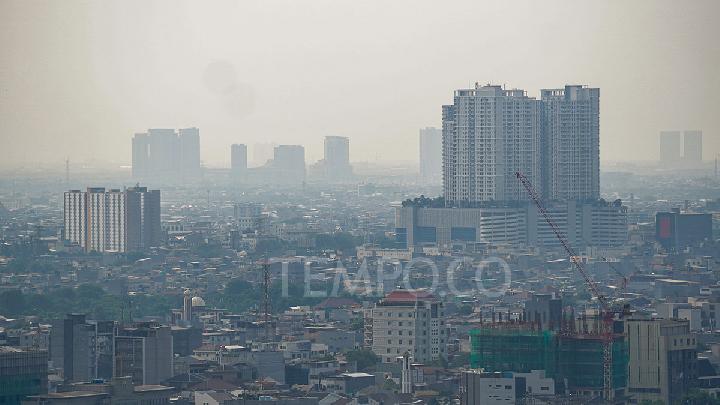
TEMPO.CO, Jakarta-It has been more than six months since devastating forest fires in Sumatra and Kalimantan caused the annual havoc not only in Indonesia but also in neighboring Singapore and parts of Malaysia. There were loss of life, health hazards and massive environmental degradation.
With another dry season just around the corner and about 50 hotspots already detected by the Meteorology, Climatology and Geophysical Agency (BMKG) in Sumatra and the Riau archipelago, the question that needs to be asked is just how ready we are to deal with yet another potential disaster.
Dubbed as the worst transboundary haze pollution since the first severe one in 1997, last year's fires occurring from June to October destroyed some 2.6 million hectares of forest and farmland in Indonesia and caused losses estimated at US$33.5 billion.
Furthermore, thousands of residents in six provinces-Riau, Jambi, South Sumatra and West, Central and South Kalimantan-had to be relocated away from their homes after the government declared a state of emergency in those areas. The health of more than 43 million people were affected, with the worst cases of respiratory diseases suffered by young children and senior citizens.
What lessons have been learned from the disaster and what action has since been taken to prevent a recurrence of the fires or to at least lessen their destructive impact?
President Joko Widodo's immediate response to impose a moratorium on new forest and peatland clearances is certainly commendable, along with his declaration that peatland restoration will be the keystone of the government efforts to prevent fires and reduce carbon emissions.
As a result, all eyes are now on the newly established Peatland Restoration Agency (BRG), led by former environmental activist Nazir Foead. The BRG has become the main institution mandated to address a problem that has kept recurring over the past two decades. Speaking at the 3rd Singapore Dialogue on Sustainable World Resources last April, an annual event organized by the Singapore Institute of International Studies, Foead declared there would be no repeat of the severe haze that affected the region last year.
"There will be fires, but the scale of the haze-creating fires will be dramatically reduced," said the former director of World Wildlife Fund Indonesia. "Our target is to have no haze choking our communities, our farms, our cities or our neighbors."
Those are encouraging words indeed and we hope Foead's promises are deliverable. But just what are the new resolutions that can ensure a better preparation for this year's haze season?
First, the political problem of having to coordinate all related governmental units-both central and regional-seems to have been addressed with the establishment of regional task forces in nine provinces, comprising local governments and law enforcement authorities working under the direction of the coordinating ministry for politics, law and security.
This shows good commitment, given that the failure to respond rapidly to last year's disaster was because of a woeful lack of coordination between local administrations and the ministries of the environment and forestry, health, social affairs, finance and transportation. The primary responsibility for preventing and tackling forest fires will continue to rest with the respective provincial and local governments.
Most importantly, are the underlying causes of the fires being seriously addressed? What is being done to ensure that the moratorium on new land clearances-despite its many shortcomings-is being complied with by all government units and what mechanism is in place to monitor that compliance? Is the One Map policy being enforced? This initiative was intended to avoid the overlapping of laws and regulations and above all, to ensure that measures such as the No Deforestation policy can be transparent and effectively supervised.
It is also encouraging to hear that in addition to the physical preventive measures being put in place-such as the water canals surrounding peatlands and additional wells in villages-the private sector also finally seems to be playing its part in forest protection.
Although it might be a case of too little too late, companies like Golden Agri Resources appear committed towards a sustainable forest economy with its long-term financing program aimed at helping independent small-holders increase their productivity without opening up new lands.
All these measures seem hopeful but their effectiveness still need to be tested and proven when the haze season comes to haunt us once more.
Yuli Ismartono